Review: The Fighter King, by John Bowers

The Fighter King (2010)
By John Bowers
How did I get this book? I bought it.
Available on Amazon.
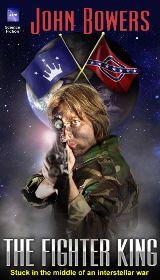
cover imageJohn Bowers has written an impressively constructed, gritty sci-fi that blends several genres: military novel, political allegory, and Bildungsroman. His writing is sharp and clear, with natural-sounding dialogue and snappy, economical phrasing. His prose is error-free.

The book’s main character, Oliver Lincoln III, is a young man who identifies as pacifist, even though his father runs a major arms company known for its excellent space fighters. To Oliver’s way of thinking, such craft should only be used for planetary defense. The novel’s main plot takes Oliver from his native Terra (which seems to be the future Earth) to one of the many planets humans have colonized, Sirius. He’s there to sell his company’s fighters to the Sirian military. While there, Oliver comes to suspect that the Sirians have designs on another human-colonized planet, Vega. As the plot progresses, Oliver moves away from his pacifist impulses.

He moves about as far as you can get, actually. The strongest parts of the novel, I thought, were those that follow Oliver on the battlefield. Bowers does a terrific job portraying warfare’s disturbing mixture of camaraderie, horror, frustration, terror, and excitement. It’s through this meaty central portion of the novel that Bowers generates a convincing coming-of-age story as we follow Oliver from where he starts — as a nice and bright but naive and pudgy young man — to where he ends up —  as a fit, tough, morally righteous, yet very humane warrior.

Meanwhile, the novel’s subplot follows events back on Terra, where Oliver’s family worries about his fate and where his best friend, Henry Wells, pursues a related political agenda.

I’d categorize The Fighter King as “soft sci-fi.” Though Bowers gives us a world with FTL travel, laser weapons, and anti-grav devices on vehicles and elevators, the emphasis isn’t on the tech. It’s on warfare and politics. Battlefield strategy relies on trench lines, infantry ground assaults, and field artillery, giving those scenes a WWII, rather than futuristic, feel. The novel’s gender politics also remind me more of mid-20th-century sci-fi: almost every woman Oliver encounters is a sweet, guileless, gorgeous babe, and he’s irresistible to them — even near the beginning of the novel, when he’s not just short and balding, but also pudgy. I thought this element of the novel was rather charming — sort of Captain Kirk-y — though I can imagine some readers finding it tad annoying that the female characters don’t have a bit more heft. I believe other books in the larger Fighter Queen Saga have more central female characters.

The novel’s political subplot, especially the heavy use of allegory therein, did strike me as weaker than the main plot. Bowers inventively aligns the Sirians with the mid-19th-century U.S. Confederacy. He does this both allegorically — his main character is named Lincoln, etc. — and by proposing a literal connection: Sirius was colonized in part by racist groups from the American South (Bowers gives the Sirians southern accents), which then took over the planet, subjugating and enslaving other colonizing groups. This racist civilization is aggressively imperial (there’s also a Nazi connection, as the Sirian president is named Adolph). Their militarism is motivated by their desire to acquire new “product” for their slave trade. They seem to be primarily interested in enslaving women, and the peaceful planet of Vega is known for its genetically engineered beauties.

In Bowers’s hands, this set-up yields a passionately political novel: pro-human rights, anti-racist, and pro-military. That message comes through convincingly in Oliver’s experiences, and I liked it. But the Henry Wells subplot makes the latter parts of the novel heavy-handed. Wells, as a member of Terra’s Senate, is trying to push through a bill that will hugely increase funding to the planet’s military. His reasoning: the Sirians are a major threat, and peaceful planets, such as Terra, have let their militaries go entirely to seed. When Sirius comes for Terra, which he believes it will, Terra will fall. Opposing him are a group of “pacifist” senators, many of whom are obvious allegorical stand-ins for contemporary political figures (Jacques Kennedy = Ted Kennedy, William Boxer = Barbara Boxer, Dianne Weinstock = Dianne Feinstein). Once he gets started on the allegory, Bowers really lets go: his Jacques Kennedy has a “smug, alcohol-bloated face” (Loc. 7676), “pale, rheumy eyes” (Loc. 8949), “a face as puffed as his silver hair” (Loc. 8938), etc.

As a reader, I’m bugged by this sort of thing. First of all, I feel as though I’m being hit over the head with Bowers’s point:  This novel may seem to be set in the future, but really I’m making a point about the contemporary U.S. Get it? Get it?!? GET IT???!!! I did get it. I got it from Oliver’s experiences and realizations in the main plot. But when we move into such blatantly obvious allegory, I begin to get a little offended as a reader. Does the author, I begin to wonder, think I’m not quite smart enough to get connections that are painted a little more subtly? I sometimes have this reaction to left-wing artists as well, folks like Michael Moore and Oliver Stone. For instance, about halfway through Born on the Fourth of July, I began to feel I was being repeatedly hit over the head with the mallet of The Point because Stone thought that was the only way to make me notice there was one.

Also, the allegory seems to draw Bowers into some really thin characterization. If this author is passionately hawkish and believes it’s both foolish and irresponsible not to have a strong military — fair enough. But the political figures who oppose Henry are so sniveling, so hypocritical, so awful, so completely without redeeming features, that they lose all depth. For instance, it’s suggested that Kennedy opposes Henry’s military spending bill not because he’s a pacifist who privileges social over military spending, but because he’s secretly pro-slavery:

a few years ago, on one his annual “fact-finding” tours of Sirius, someone with a high-powered camera holographed him on a party boat fucking slave girls. … He also has an estate in Tennetucky that reportedly gets stocked with fresh girls every time he visits. The man’s a real lecher. (Loc. 9015)

Not only do the people opposing Henry have no good arguments to make whatsoever, but they’re actually actively evil. I think it’s the closeness of the fictional material to its real-life analogue that pushes Bowers into this sort of thing. His hatred of the real Kennedy is so profound that the senator’s analogue in the novel becomes little more than a mustache-twirling, bwa-ha-ha villain. It’s only in the allegory that we see this; in the main plot, Oliver has a fair amount of interaction with a slave-owning Sirian man who was once his college roommate, and that figure is far more subtly drawn than the cardboard senators.

That’s the thing about allegory: it only works well if the vehicle — the fictional story — has enough life of its own to exist richly and meaningfully apart from the tenor — the real-life analogue toward which the fiction is pointing. Here the tenor has reared up and poked through, taking over the whole show and leaving a notably thin patch in the fiction.

Fortunately, the subplot is a relatively small part of the overall book, and the main plot is very strong.

I notice The Fighter King has been given a new cover, which I think improves on the silhouette-style art the book had when I downloaded it. The book’s formatting is good, but there are scattered small glitches, the kind caused by non-standard characters that the KDP conversion program doesn’t know what to do with. Those characters end up as little boxes with question marks inside or other  strange characters. They certainly don’t impeded understanding; they’re cosmetic.

An edited version of this review will be cross-posted to Amazon.
Stephen King, Tom Petty, and the Paper Book

Did you know Record Store Day happens in mid-April every year?

Record Store Day was conceived by Chris Brown, and was founded in 2007 by Eric Levin, Michael Kurtz, Carrie Colliton, Amy Dorfman, Don Van Cleave and Brian Poehner as a celebration of the unique culture surrounding over 700 independently owned record stores in the USA, and hundreds of similar stores internationally. (accessed 6/1/12)

In 2011, Tom Petty and The Heartbreakers marked Record Store Day by re-releasing their first two albums on limited-edition colored vinyl — just 4,500 worldwide prints of each. These LPs were sold only in independent record shops.

Just recently, Stephen King has announced that his forthcoming book, Joyland, will be available only in paper, at least initially.

You can see the connection I’m making, here.

It’s not exact. Vinyl has long since been a collectors’ medium for music, whereas paper is still the mainstream medium for books. But the similarity is there nonetheless. The Tom Petty re-releases are about harnessing nostalgia for a superseded form in defense of indie record shops, themselves an embattled entity. King, in turn, couches his decision in the language of nostalgia: “I … loved the paperbacks I grew up with as a kid, and for that reason, we’re going to hold off on e-publishing this one for the time being” (accessed 6/1/12).

So, are book stores analogous to record shops? Borders = Tower Records, which went bankrupt in 2006? Ebooks = MP3s? Well, you probably know what I think.

Don’t get me wrong, here. I like browsing in book stores, and I own about a zillion paper books. But I don’t buy many of them, nowadays. I’m one of those people who still buys an occasional CD instead of downloading an album on MP3. But maybe I won’t be doing that ten years from now. CDs take up so much more space, and I have to rip them if I want them on my iPod.

As for record shops, I still like browsing in them, though there isn’t one anywhere near where I’m living right now. I was last in one in summer 2011 — the fantastic Strictly Discs in Madison, Wisconsin. I sold them the last of my import and special-release vinyl. I think they paid me $58.

And hey, I love Tom Petty, too. That’s the music I grew up with. If you’re interested in those re-releases, they’re available used on Amazon here and here.

Problem is, it’s not really about what I like. It’s about what the whole stinking mass of us like, because the whole stinking mass of us spends enough money to dictate how things work for everyone. The resisters eventually get relegated to collector status, and there’s nothing they can do about it.

That’s a hard thing to accept. Heck, you’re looking at someone who held onto her favorite vinyl until 2011, close to twenty years after her last turntable broke. It took that long for me to admit that I was just never going to buy another turntable.

You know what else I’m never going to buy?

Another bookcase.

WSJ Article on Darcie Chan

This Wall Street Journal article on Darcie Chan’s experience publishing The Mill River Recluse as an indie ebook is pretty dated (December 2011), but it’s new to me. Back at the time of the article, Chan had sold 413,000 copies at the $.99 price point, earning about $130,000. This on a book that had been rejected by a hundred agents, and then, under representation, by a dozen publishers. And six months later, the book’s still selling: it’s ranked 787 in the Kindle store, as of this morning.

What strikes me about the article is that Chan is portrayed as still very much wanting a traditional publishing deal for the The Mill River Recluse:

Multiple audio-book publishers have made offers. Six film studios have inquired about movie rights. Two foreign publishers bid on the book. Ms. Chan is holding off on such deals, for fear they might sabotage a potential contract with a domestic publisher.

Ms. Chan still wants to see her book in print. Several librarians have contacted her seeking print copies after patrons requested her book. “I have people writing me begging me for a hard copy, book clubs and libraries calling me, and I don’t have a hard copy to provide for them,” she says.  (accessed 6/1/12)

So, it’s not that she hopes to use The Mill River Recluse as a springboard to getting a contract for future books. It’s this book she wants under contract. But why?

I doubt it’s about money — the article points out that Chan has already made quite a bit more than first-time traditionally published authors usually get in the way of advance. Plus, she says writing is “more of a hobby” for her, since she works full-time as a lawyer (accessed 6/1/12). It’s hard to see a simple desire for a hard copy as the motivator, either. After all, she could use print on demand to produce such a book, but hasn’t.

So what is it, exactly? Why isn’t it enough to be providing a very well received novel to readers at an incredibly affordable price, while making a nice chunk of change?

I wonder if Chan still feels the same way and, if so, whether she’s any closer to getting what she wants.


MM: Punctuating Parentheses

A writing teacher will generally tell you to use parentheses very sparingly. I agree. When overused, they 1) become an annoying tic and 2) can lead you to include stuff that you’d be better off cutting. But that’s not to say they aren’t mighty useful at times. It’s definitely worth mastering them, thereby enlarging your punctuation arsenal.

Parentheses = Invisibility Cloak

When you use a set of parentheses, you’re cordoning off its contents from the rest of the sentence. Whatever’s inside those parentheses becomes invisible to the main sentence’s syntax and punctuation. Writers run into problems when they don’t follow that rule. Here’s an example of incomplete invisibility:

Luckily, his pet crow, (which I call Poe), caws loudly to let me know when he’s around.

If the stuff inside parentheses is invisible to the main sentence, you should be able to pluck the whole parenthetical aside out without having to make any changes to the sentence’s syntax or punctuation. But when you try that with the example I’ve just quoted, this is what you get:

Luckily, his pet crow,, caws loudly to let me know when he’s around.

Two commas in a row can’t be right, so the punctuation surrounding the parenthetical aside must’ve been incorrect. In fact, the writer was treating the phrase “which I call Poe” as though it were part of the main sentence, not separated out by parentheses. Here’s how it should look:

Luckily, his pet crow (which I call Poe) caws loudly to let me know when he’s around.

When writers make punctuation errors within parentheses, it’s also often because invisibility is not being maintained. Such an error might look like this:

Luckily, his pet crow, (which I call Poe,) caws loudly to let me know when he’s around.

When you do the plucking-out test, here, you lose one comma but not the other:

Luckily, his pet crow, caws loudly to let me know when he’s around.

No way should there be a comma in that spot. The error reveals that, once again, invisibility is not being maintained. The writer is punctuating in and around the parenthetical aside as though it were part of the main sentence.

Commas = Sheep Dogs

Another error I see has to do with grouping. When it comes to parenthetical asides, commas and periods are sort of like sheep dogs: they “herd” the aside into the right part of the sentence. Here’s an example of “comma-herding” gone wrong:

After Saran-wrapping the latest condiment-shelf concoction, I crammed it between the others I’d created over the past few nights: a bologna and apple jelly sandwich, (eew!) a Swiss cheese and tartar sauce sandwich, (blah!) and a peanut butter, mustard, and pickle relish sandwich.

In the above sentence,  the “(eew!)” aside goes with “a bologna and apple jelly sandwich,” not “a Swiss cheese and tartar sauce sandwich,” but the comma has grouped the “(eew!)” with the latter. The same thing is happening with “(blah!)” — it should go with “a Swiss cheese and tartar sauce sandwich,” but the comma has grouped it with “a peanut butter, mustard, and pickle relish sandwich.” Here’s how the sentence should look:

After Saran-wrapping the latest condiment-shelf concoction, I crammed it between the others I’d created over the past few nights: a bologna and apple jelly sandwich (eew!); a Swiss cheese and tartar sauce sandwich (blah!); and a peanut butter, mustard, and pickle relish sandwich.

(Want to know why I’ve replaced the commas with semicolons? See my Mechanics Moment on semicolons and complex lists.)

When a parenthetical aside appears at the end of a sentence, you have to decide whether it should stand alone as its own independent clause (in which case there has to be a complete sentence within the parentheses) or be included within the main sentence. If it really is part of the sentence, the period needs to herd it into the sentence, rather than leaving it stranded. Here’s a stranded aside:

I can only see Grandpa Edgar and Kyle, and that’s because they still have work to do on this side. (helping yours truly)

It should be punctuated thus:

I can only see Grandpa Edgar and Kyle, and that’s because they still have work to do on this side (helping yours truly).

In contrast, an aside that stands as a real independent clause should be outside the main sentence’s period and should have an internal period as well:

I didn’t like pastrami or pimento cheese, so I knew I’d been influenced by some new visiting kid. (I’m a plain ole peanut-butter-and-jelly-with-Fritos-on-the-side kind of girl.)

MM: Funky Plurals

English is a compulsive eater. It grabs words from other languages and … sluuuuuurp! … swallows them right down. That means we have a number of terms that don’t operate according to the usual English pattern of marking the plural with a terminal “s.” Most such words are from Greek and Latin. Once you get a feel for how they work, they fall into place. So, okay, say it with me:

One index, two indices.

One phenomenon, two phenomena.

One datum, two data.

One medium, two media.

One criterion, two criteria.

One antenna, two antennae.

One cherub, two cherubim.

One thesis, two theses.

One colloquium, two colloquia.

And so forth. There are dozens. On the other hand, some of these words have been Anglicized to the degree that an English-style plural is at least an option. Yes, you can have “two octopi,” but you don’t have to: “two octopuses” is fine. And as I recall, a few years ago The New York Times dumped “millennia” in favor of “milleniums.” That one still jars, for me, but oh well.

Review: The Aberration, by Bard Constantine

The Aberration (2012)
By Bard Constantine
How did I get this book? I bought it.
Available on Amazon.

The Aberration reimagines our world as subject to incursions from a sort of demon realm. Defending us is an ever-shrinking group of chosen (or maybe cursed!) people. Reborn again and again, these people fight off each incursion, or “aberration.” Every aberration puts the whole world in danger. So far, the demons have failed to win, but over time, our side has taken heavy losses. The situation has become dire.

This taut, well structured, novella-length horror story provides a great reading experience. The book makes use of a tried-and-true horror plot: a small, varied, and nicely drawn group of characters are besieged by monsters in a creepy environment (a mechanized flour mill, in this case). Constantine’s third-person narration moves fluidly among various points of view — the hero’s, those of several of the other characters, and that of the police captain investigating the aftermath of the story’s main events. The monsters are well realized — I found the initial shape of the “Others” particularly shudder-inducing … brrrr — and the fight scenes are handled clearly and tightly. The Aberration is a very satisfying read, standing out as new and creative while meeting the expectations of its genre.

The book does have minor writing errors. Semicolons are misused at times, and some sentences, especially early on, have verbiage that probably should be trimmed away, given the spare, direct prose common to the genre (“The television uttered garbled idioms, hypnotic suggestions that died futilely within his unheeding ears …”). But most of the writing glitches are simple proof-reading issues (stuff like “its” vs. “it’s”); a quick run-through from a pro would catch these and lend the book the polish it deserves. Overall, the glitches didn’t impede my reading experience. The story and characters easily transcend them. And the ebook’s formatting is perfect.

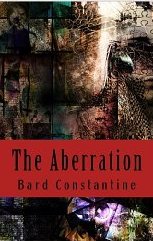
I think Constantine could improve on the book’s cover. He’s used an abstracted, collage-like artwork depicting warriors, and it no doubt looks terrific on the paperback — disturbing, yet classy. But when it’s shrunk down to thumbnail size, it’s impossible to make out what you’re looking at, and seen in black and white on my Kindle screen, even enlarged, it’s pretty much a muddy blur of indecipherable shapes. The media just aren’t doing justice to it, and that might make the book less attractive to readers. And that would be a real shame — this is a book that should be read.

An edited version of this review will be cross-posted to Amazon.
Review: Pure Healing, by Aja James

Pure Healing (2012)
By Aja James
How did I get this book? I bought it.
Available on Amazon.

Aja James’s Pure Healing is one hot read. This paranormal romance, hopefully the first in a series, is quite well written. And it’s hot. The pacing is quick, and the plot is clear. And it’s hot. The characters are well developed. And did I mention it’s hot? ‘Cause it is. Big time.

The story revolves around a group of blood-consuming beings known as the Pure Ones. They’re not vampires; actually, they battle vampires. They’re immortal, and each possesses a unique gift. They also have a Cardinal Rule — no intercourse except with one’s “Eternal Mate.” Getting frisky is okay, but if you go all the way, so to speak, you waste away and die a month later. Or you turn into a vampire.

Pure Healing focuses on a male named Valerius and a female named Rain. As the official healer of the Pure Ones, Rain is partially exempt from the no-intercourse rule: she’s required to take a consort for one month every ten years to recharge her spiritual batteries. Val has never served as her consort because his past makes the very idea of sex unbearable, even though he’s intensely drawn to Rain. (Val’s past is, in fact, so unpleasant that survivors of sexual violence should be aware that some of the material here could be disturbing, despite the care with which James handles it.) Rain has her own reasons for keeping her emotional distance from her consort. James weaves all these threads together into a wonderfully vexed and tortured relationship. The situation positive throbs with desire and doubt, need and denial. And did I mention it’s hot? It’s hot.

The group of Pure Ones we get to know contains a number of well defined individuals, and hopefully future books will take up their stories. I’d particularly like to see a story focusing on Sophia, the young queen of the Pure Ones. In Pure Healing, Sophia provides a brief first-person frame narrative — an engaging way of handling exposition and tying up loose threads. Her voice is terrific, and I’d love to see more of her.

I also hope future books will do more world-building: why is Sophia the queen? Why is Boston Pure-Ones Central, so to speak? Where did the Pure Ones come from? Were all vampires once Pure Ones? And who made the tortuous intercourse-only-with-one’s-eternal-mate rule? Are there deities behind all this? I’m waiting with bated breath to get a deeper understanding of the neat world James is constructing.

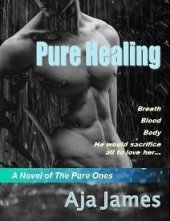
The copy of the book I read had significant formatting problems — no title page, no copyright claim, no page breaks between chapters, and paragraph indents that come and go. However, the author mentioned she was preparing a correctly formatted copy, so I imagine the flawed version I saw is now a thing of the past. The book’s cover is professional looking, but I wonder if the black-and-white photography and the fonts selected quite fit the romance genre, which strikes me as more full-color and serify. Well, there’s nothing wrong with standing out from your genre, so long as readers find you. It’s definitely a good-looking cover.

At any rate, this is one book readers should definitely find. I read it in one sitting — it was that involving. Highly recommended.

This review will be cross-posted to Amazon.

Lipskar and Konrath on the Agency Model

A few days ago, Digital Book World published an open letter from literary agent Simon Lipskar to the Department of Justice. In the letter, Lipskar takes issue with the government’s reasoning and data in the anti-trust case against Apple and five of the Big Six publishing houses. Lipskar’s letter is lengthy and detailed. It’s definitely worth a read.

A couple days later, J. A. Konrath took on Lipskar’s reasoning and data in a blog entry. This piece, too, is worth a careful reading. It’s pretty convincing (admittedly, I’m one of those folks who finds Konrath convincing on just about everything).

What I want to take issue with is Konrath’s desire to prove the agency model is A Bad Thing. I’m not so sure that it is — at least not for him and for me and for other indie authors.

Konrath has illustrated clearly that authors sell fewer books and make less on each sale under the agency model. But that doesn’t mean that the agency model is bad “for authors.” It means it’s bad for authors whose work is being distributed under that model. For indie authors, the agency model — and anything else that keeps traditionally published books overpriced — may be A Good Thing. Maybe even A Very Good Thing.

Here’s my thinking:

Put on your fantasy hat, and imagine that things had gone very differently when Amazon first brought out the Kindle in 2007. Imagine that the big publishing had realized a game-changing event had occurred. Imagine that the head honchos at these companies had gotten together with their top executives and explained that things were going to change, and that there wasn’t a damn thing they could do to stop it. Imagine that they had set about reforming their businesses to prepare for the coming world — a world in which publishing would become predominantly digital within ten or fifteen years.

They would’ve started cutting their workforces through attrition and early retirements. They would’ve made all their authors’ backlists available, and they would’ve offered ebooks at prices far, far below those of paper books. Maybe they would’ve invented ereaders and POD systems of their own. That is, instead of being dragged kicking and screaming into the digital age, imagine that they chose race into it, competing with one another to see who could arrive first and best.

In such a world, would indie authors be seeing the success they are now? In a world where every novel that’s ever been traditionally published, including current best-sellers, was available on Amazon for between $.99 and $4.99?

I don’t think so. Some indie authors would be successful, sure, but I don’t think the explosion of indie success we’ve witnessed would’ve happened. I think the justifiably high cost of paper books and, more importantly, the consistent over-pricing of traditionally published ebooks have opened the door to the proliferation of financially successful indie authors.

Here’s why: there are a lot of people out there who love to read but don’t have much money. I’m one of them. Once I realized that there were tons of indie books out there that were just as good as traditionally published books but cost way less, my buying habits shifted. Big time. That kind of shift, writ large, explains why indie authors are doing so well.

Konrath’s blog entry quotes an anonymous letter from a publishing-industry insider who skewers Lipskar for implicitly asserting that books are “fungible.” Here’s one place where I’ll disagree with Konrath and his anonymous letter-writer: books are indeed fungible in certain situations.

The italicized qualifier is important. This is one of those issues where it’s easy to make someone sound stupid by putting extreme words in his mouth, an argumentative technique known as building a straw man. If you say, “books are fungible,” you sound like an idiot. Obviously, books differ from one another radically; there are many books out there I would love to read, and probably quite a few more I’d abandon after the first page. Such books are not interchangeable. Furthermore, I follow several fantasy authors and series quite avidly. When Jim Butcher brings out a new Dresden novel, nothing else will substitute. I must read that book immediately, and I would pay quite a bit for the privilege of doing so. A novel in one of the series I follow is not interchangeable with something else.

That said, if you give me a mass of 1,000 books I’ve never heard of before, by authors I’ve never heard of before, the books in that mass start out, in my mind, as fungible. Each one might turn out to be one of the best things I’ve ever read; each one might also turn out to suck. Are they fungible in a real sense? No, of course not. They’re all different from one another. But as an uninformed buyer, I don’t know about those differences, yet. I won’t know about them until I read the books.

So I take the 1,000 books and I start looking at their covers, titles, reviews, and descriptions. I begin downloading Kindle samples to see what I might like. Now I have more information to work with, and I’m able to weed out a lot of books that just don’t interest me. Let’s say I’m left with fifty books that I really want to read. I’ve gathered all the info I can about these books, and they all sound terrific.

Now, if I’m in Barnes & Noble, I can’t buy fifty books. Even at mass-market-paperback prices, I couldn’t afford it, not even spread out across a whole year. But let’s say I’m shopping on Amazon, and twenty of the fifty books are reasonably priced indies. I could buy three of the fifty that are traditionally published ebooks, pay my $35. Or I could buy one traditionally published book and ten indie books. I really enjoy reading, so I go with the latter option.

That’s the kind of situation in which books are fungible — you’re browsing, you have limited funds, and you’re looking for new things. You find a bunch of things that look promising, based on limited information. Then you have to decide which you’re going to buy. In such a situation, price is an enormous factor for many readers. Once you choose your books, buy them, and read them, they won’t be fungible in your mind any longer. In your mind, they’ll become the differentiated individuals they always, in fact, were. But before you read them, the situation was much more fluid.

That’s where the agency model — and the Big 6’s broader recalcitrance on pricing — may have helped the indie movement. When readers go shopping without a particular book or author in mind, there’s a window into which a new book or author can slip. If traditionally published books cost many times more than indies, there’s more chance the book that slips in will be an indie. This is what Lipskar is talking about when he asserts that “new publishers, self-publishers and retailer-owned publishers [are] providing consumers ebooks at lower prices than the agency publishers and taking significant market share from them in the process” (accessed 5/13/12).

Lipskar doesn’t seem to think the huge pricing advantage traditional publishers are handing to indies threatens his livelihood, along with that of everyone else involved in traditional publishing. If I were him, I’d be worried. What happens when “significant market share” becomes “majority market share”?

At any rate, I ask you this: why are we fighting the agency model? Sure it’s bad for the authors who are trapped in it, but that’s not us. Maybe someone can explain to me why I’m wrong. Until then, I’m thinking anything that pushes up the cost of traditionally published books and ebooks is A Good Thing for indies. Let the Big Six keep losing their market share. We know where those readers are going.